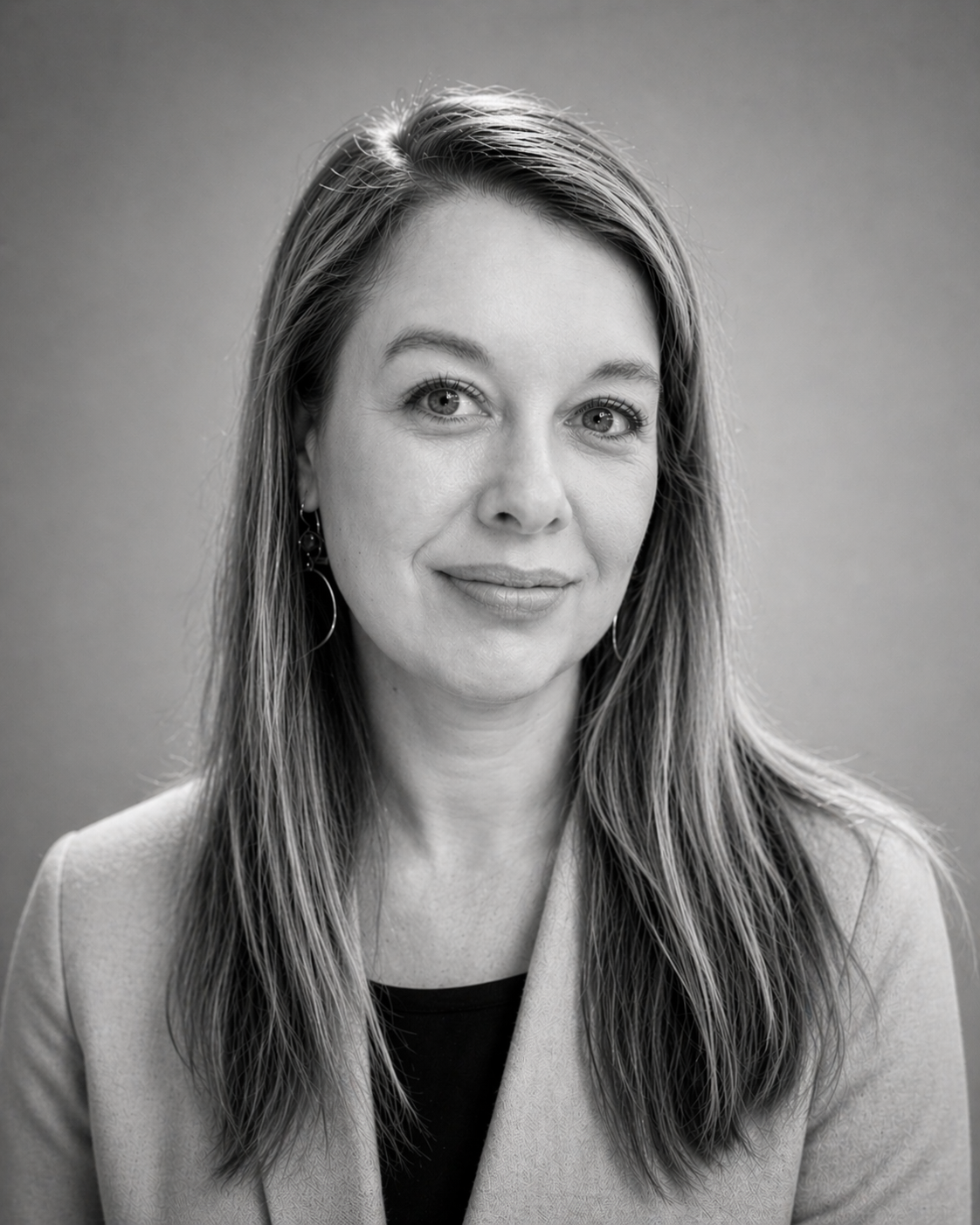
Marike Groenewald is an international facilitator, leadership practitioner and programme designer with more than two decades of experience working with leaders, organisations and communities navigating complexity, change and collaboration.
She is the founder of Anew, a leadership and organisational development practice established in 2016, through which she designs and facilitates learning, leadership and organisational processes for organisations across the public, private and non-profit sectors. Her work has taken her to more than 30 countries, working with participants and organisations across Africa, Europe, Asia, Latin America and the Middle East.
At the heart of Marike’s work is a belief that meaningful change depends on our ability to think well together. Her facilitation practice draws on approaches including Open Space Technology, the Thinking Environment and Ontological Coaching, and places particular emphasis on participation, dialogue, human agency and creating spaces in which people can contribute their own knowledge and experience.
Marike is the founder and lead facilitator of the Anew School of Facilitation, an intensive programme that has developed facilitators and leaders from a wide range of sectors and countries over more than twelve cohorts. She has also worked extensively with the International Academy for Leadership (IAF) in Germany, designing and facilitating international leadership programmes that bring together leaders and changemakers from around the world.
Her professional experience is deliberately diverse. She has worked with governments and public representatives, civil society organisations, foundations, international networks, universities, social entrepreneurs and corporate leadership teams. Her work has included leadership and organisational development, strategy and culture processes, large-group facilitation, network and community building, democratic leadership, political and civic education, innovation, and the design of international learning programmes.
Democracy and human rights have been enduring pillars of Marike’s work. Much of her international practice has focused on strengthening the people, institutions and relationships that make democratic societies possible: developing leaders, building the capacity of civil society, creating spaces for meaningful participation, and helping people with very different experiences and perspectives think together about difficult questions. Across all of these contexts, Marike sees facilitation not as having the answers for a group, but as creating the conditions in which people can do their best thinking together.